

A surgical scar takes about twelve to eighteen months to mature. In the first weeks it is a closed but fragile line. Over the following months it usually becomes red, firm and sometimes slightly raised, and then it gradually flattens, softens and fades to a pale line. What helps most is simple: a wound that heals without tension or infection, no nicotine, silicone gel or sheets once the wound has closed, strict sun protection for at least a year, and early attention if a scar starts to thicken.
No cream or treatment makes a scar disappear. Every incision through the full thickness of the skin heals with a scar. The aim of careful surgical technique and good aftercare is a scar that is flat, narrow, pale and placed where clothing hides it.
The final appearance depends partly on things you can influence and partly on things you cannot, such as your genes, your skin type and the part of the body involved.
How a scar matures
| Phase | Time | What you see |
|---|---|---|
| Inflammation | Days 1–7 | Swelling and slight redness along the wound edges |
| Proliferation | Weeks 1–6 | The wound closes; the scar turns pink and gains strength |
| Remodelling | Month 2 to about month 18 | Redness peaks around months 2–3, then the scar softens, flattens and fades |
Many patients worry at around two to three months, when the scar often looks its worst: redder and firmer than in the first weeks. This is a normal stage of remodelling, not a sign that something has gone wrong. Even at six weeks a scar is still considerably weaker than the surrounding skin, which is why the restrictions on lifting and stretching last as long as they do.
The first weeks: protect the wound
- Keep dressings and tapes in place as instructed and keep the wound clean and dry.
- Avoid stretching the area: no heavy lifting and no sudden movements that pull on the incision. After a tummy tuck, this is why you walk slightly bent for the first week.
- Wear the compression garment as advised. It reduces swelling and supports the tissues.
- Do not pick at scabs or stitches.
- Stay off nicotine. It reduces blood flow to the wound edges and is one of the most common reasons for delayed healing.
- Report spreading redness, increasing pain, discharge or any opening in the wound.
Do not apply creams, oils or silicone to a wound that is not completely closed unless you have been told to.
Once the wound has closed: silicone
Silicone gel and silicone sheets are the scar treatments with the most consistent evidence. They keep the scar hydrated and appear to calm the overactive production of scar tissue. Start once the wound is fully closed and the stitches and scabs have gone, usually two to three weeks after surgery. Continue for at least two to three months, and longer for scars that tend to thicken.
- Sheets are worn for many hours a day and washed regularly. They suit larger, flat areas such as the abdomen.
- Gel dries to a thin film, is applied twice a day and works well on visible or moving areas.
Using either one consistently matters more than which form you choose.
Sun protection
Ultraviolet light can cause lasting darkening of a young scar. For at least twelve months, cover scars with clothing or use a high-protection sunscreen on exposed scars, especially in summer. This matters most for scars on the face, arms and chest.
Massage, tension and other measures
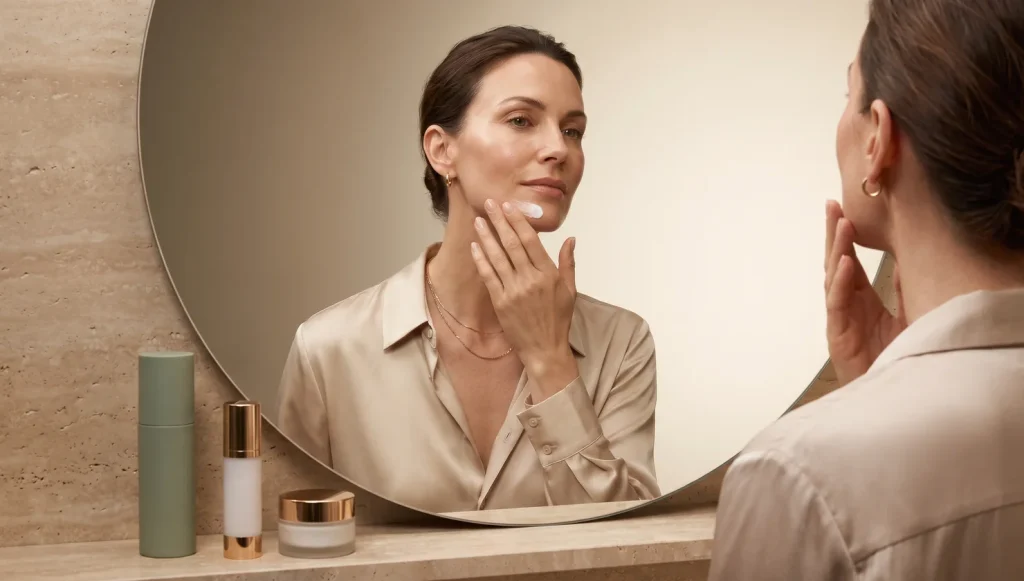
- Massage: once the wound has closed and your surgeon agrees, gentle massage with a plain moisturiser for a few minutes twice a day can soften a firm scar and loosen the tissue beneath it.
- Tension: scars under tension widen. After an arm lift, heavy lifting and strenuous arm exercise are avoided for about six weeks. After a breast lift, a supportive bra takes weight off the vertical scar and the scar in the fold.
- Taping: paper tape along the scar for some weeks can reduce tension. Your surgeon will tell you whether it is useful for you.
- Creams and oils: many, including vitamin E and onion extract, have not shown a consistent benefit over simple moisturising. Vitamin E can irritate the skin in some people. None of them replaces silicone and sun protection.
Why location and skin type matter
Scars behave differently in different parts of the body. Facial scars, particularly on the eyelids, usually become very fine. Scars on the chest, shoulders, upper back and inner arm are more likely to widen or thicken. The tummy tuck scar lies in thicker skin low on the abdomen, where underwear covers it. In a breast lift, the point where the vertical scar meets the fold is under the most tension and is the most common place for slow healing.
People with darker skin are more prone to raised scars and to temporary darkening of the scar, so sun protection and early review are especially useful.
When a scar needs treatment
Raised scars come in two forms:
- Hypertrophic scars stay within the line of the incision and are raised, red and sometimes itchy. They are common in the first months and often improve with time, silicone and pressure.
- Keloids grow beyond the original scar. They are more common in some skin types and in people with a personal or family history of keloids.
If a scar becomes thicker, itchier or more raised after about two to three months, see your surgeon. Steroid injections into the scar help many thickened scars. Other options include laser treatment for persistent redness and, for scars that remain wide once mature, surgical scar revision, usually not before twelve months.
Frequently asked questions
When can I start using silicone on my scar?
Once the wound is completely closed, without scabs or open areas, usually two to three weeks after surgery. Ask your surgeon to check it before you start.
Why does my scar look worse at three months than at three weeks?
At this point the scar is in its most active phase of remodelling, with more blood flow and collagen production. Redness and firmness peak around this time and then settle gradually.
Will my scar disappear completely?
No. A mature scar is usually a pale, flat line that becomes much less noticeable, but it remains visible on close inspection.
When can I swim or go in the sun?
Swimming is usually allowed once the wound has fully healed, often after about four to six weeks. Keep scars out of direct sun for at least a year.
Dr. Mehmet Özdemir is a plastic, reconstructive and aesthetic surgeon holding the EBOPRAS qualification, with a practice in Ataköy Towers, Bakırköy, Istanbul. If you are planning an operation or are unsure how a scar is healing, a consultation is a good opportunity to look at it together and discuss what can help.